
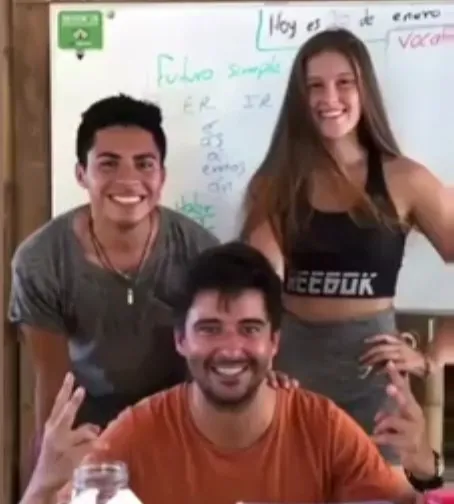
Santa Teresa is a small surf town on Costa Rica's Pacific coast that has quietly become one of the most international places in Central America. If you've landed here — or you're planning to — and you want your Spanish to actually work in daily life, this is the guide I wish someone had given me before I started teaching full-time.
I'm José Cardoza. I live in Santa Teresa and teach Spanish one-on-one to students from the United States, Canada, Europe, and Australia — most of them online, some of them in person. My students range from complete beginners (A1) to advanced professionals (C2), and they all have one thing in common: they want Spanish they can actually use, not just recite.
Here's what I've learned about learning Spanish while you're here — and why Santa Teresa is one of the best places in the world to do it.
Why Santa Teresa is a unique place to learn Spanish
Most people come to Costa Rica expecting textbook Spanish. What they find is something warmer, faster, and a lot more fun.
Santa Teresa is small but surprisingly cosmopolitan. In the same café you'll hear Spanish, English, Italian, French, German, and Portuguese. Locals (we call ourselves Ticos) are used to travelers trying out their Spanish — which means they're patient, generous with corrections, and always willing to teach you a new word.
Compared to the capital, San José, the Spanish here is slower, more informal, and full of coastal slang. If you can hold a conversation in Santa Teresa, you can hold one almost anywhere in Costa Rica.
What "Tico Spanish" actually sounds like
Textbook Spanish will get you through a transaction at the supermarket. Tico Spanish will get you friends. Here are some phrases you'll hear every day in Santa Teresa that no Duolingo course will teach you:
These aren't just tourist curiosities. They're the words Ticos actually use, every day, and they're the difference between speaking Spanish and fitting in.
Want to start sounding local? Here are 20 Costa Rican Spanish phrases you will hear around here, with examples.
Where to actually practice
One of the biggest mistakes I see visitors make is hanging out only in English-speaking bubbles and then wondering why their Spanish isn't improving. Santa Teresa makes it easy to practice if you know where to go:
- The Saturday feria (farmers' market) — vendors love a chat. Ask where the mangoes are from, ask how to cook the yuca. They'll help you.
- Sodas (local family-run restaurants) — instead of the trendy spots, eat where the staff speak Spanish first. Order in Spanish, even if you stumble.
- The bus to Montezuma or Mal País — drivers and passengers are some of the best language teachers you'll ever meet. They have time.
- Surfing with locals — if you surf, paddle out where the Ticos are. You'll learn ocean vocabulary you won't find in any book.
- Your landlord, your neighbor, the guard at the condo — these people see you every day. A daily "¿Cómo amaneció?" builds a relationship and your Spanish at the same time.
Why online lessons still make sense — even when you're here
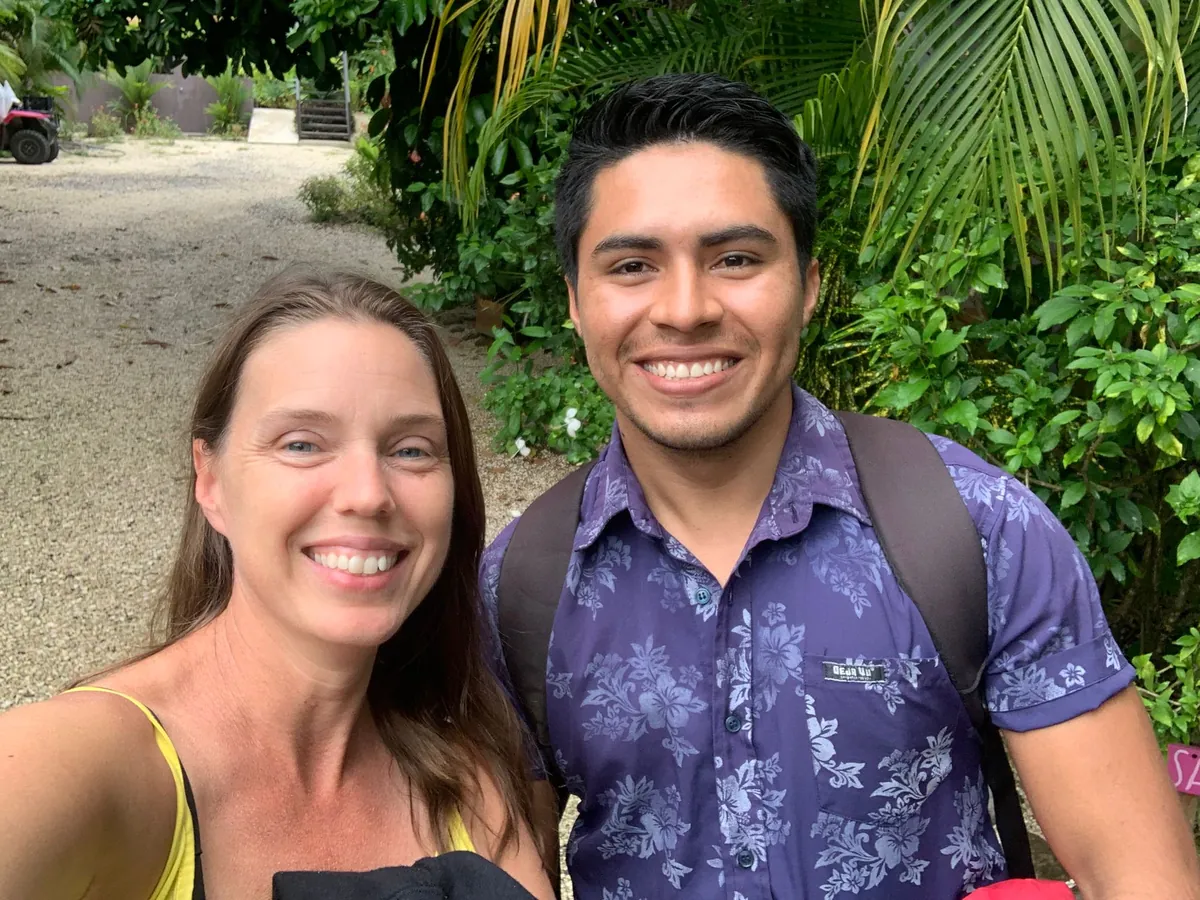
This surprises people: most of my students are here in Costa Rica, but we meet online. Why?
"Lessons are where you build the Spanish. The street is where you test it. The two work together."
In an online lesson with me you get:
- One-on-one attention, in your time zone, on Zoom.
- A lesson shaped around your life. Surfers get surf vocabulary. Remote workers get meeting vocabulary. Parents get the Spanish they need to talk to their kid's teacher.
- CEFR levels from complete beginner (A1) to advanced (C2) — I meet you where you are.
- No rigid textbook unless you want one. Real conversation, real corrections, real progress.
Then you walk out of the lesson, into Santa Teresa, and you try it. The feedback loop is fast, and that's where fluency actually happens.
Want to hear from real students?
Read reviews from my students on Tripadvisor — every one is a real person who started at a different level.
Read reviews on TripadvisorBefore your first class, you can warm up with two free guides: Ser vs estar and Por vs para.
Ready to start?
If you're in Santa Teresa — or anywhere in the world — and you want to learn Spanish with a Costa Rican teacher who actually lives here, the easiest way to start is a no-pressure trial lesson.
¡Pura vida, mae! See you in class.
— José
The message arrives already written — you just add your question.
Did this help? You can help me too: share this article with someone who is learning Spanish or coming to Costa Rica, leave a review on Tripadvisor or Google if we have met, or follow me on Instagram. Muchas gracias!